Case study 05 / 09
Kutch Embroidery
A visual identity and brochure celebrating the embroidery communities of Kutch, Gujarat, built from mirror-work, chain-stitch and colour.
Overview
The craft is dense, mirrored, rhythmic and loud with colour, and every community stitches its own story. The challenge was to design an identity that feels handmade and specific to Kutch without becoming a pastiche.
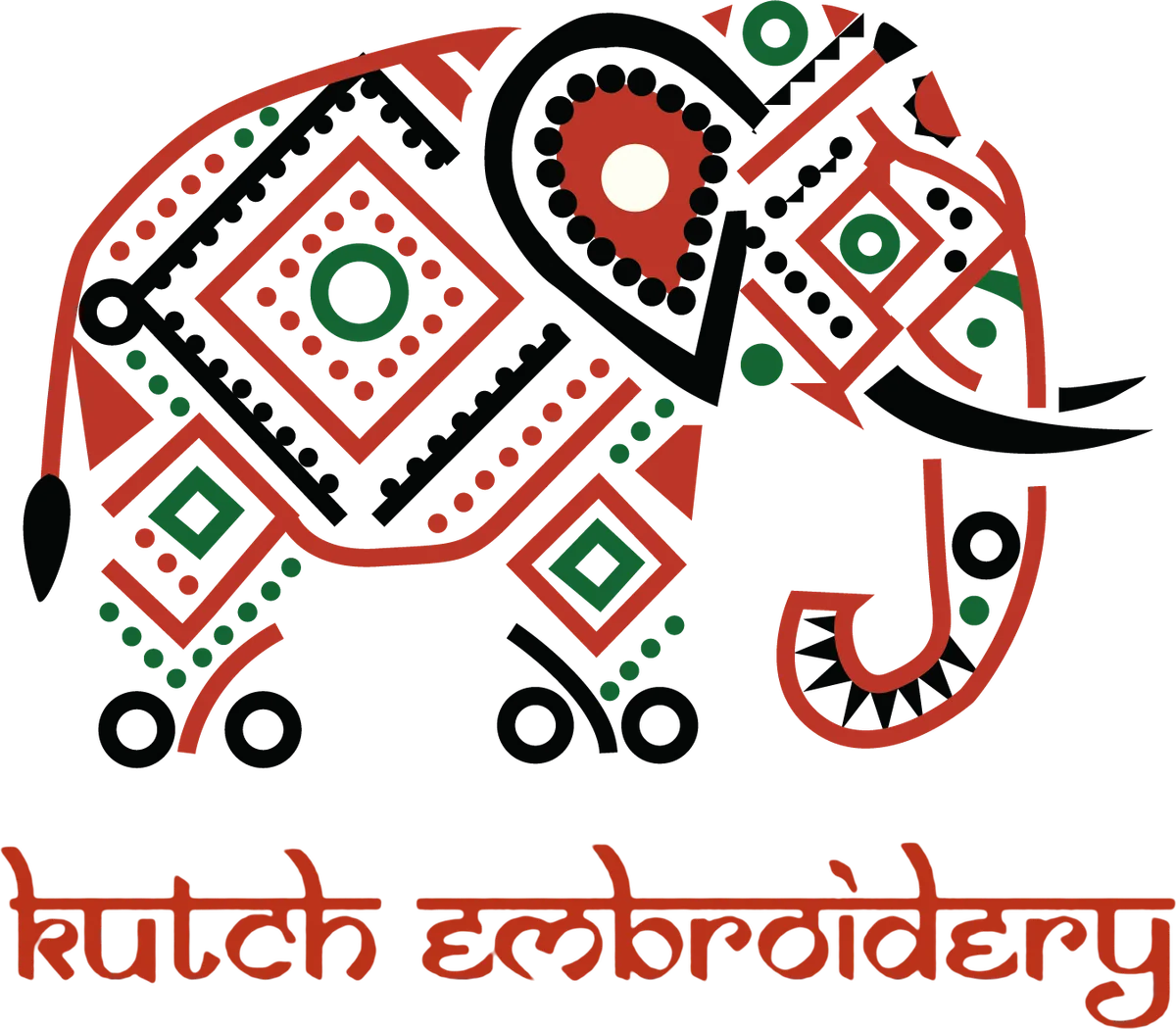
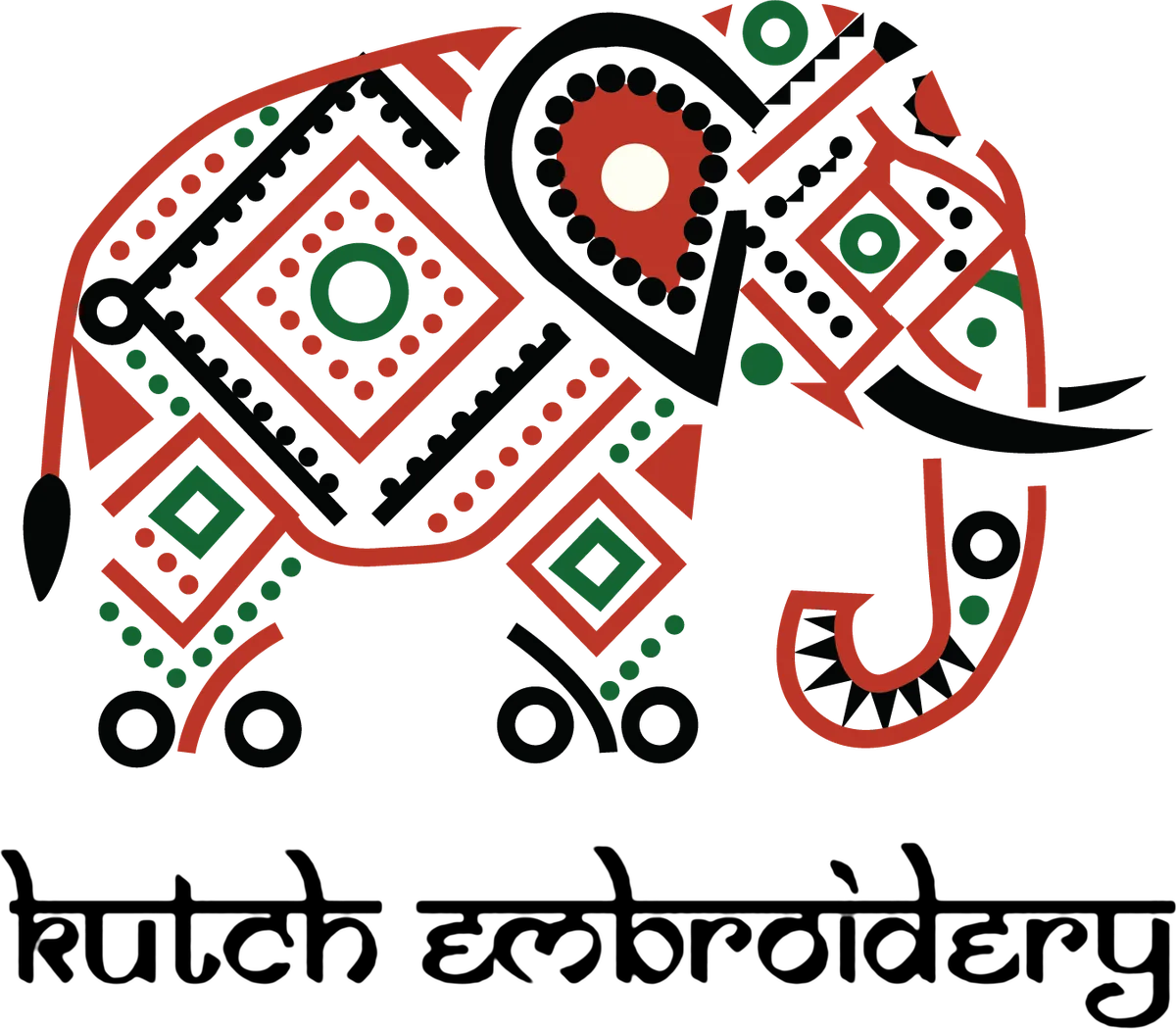
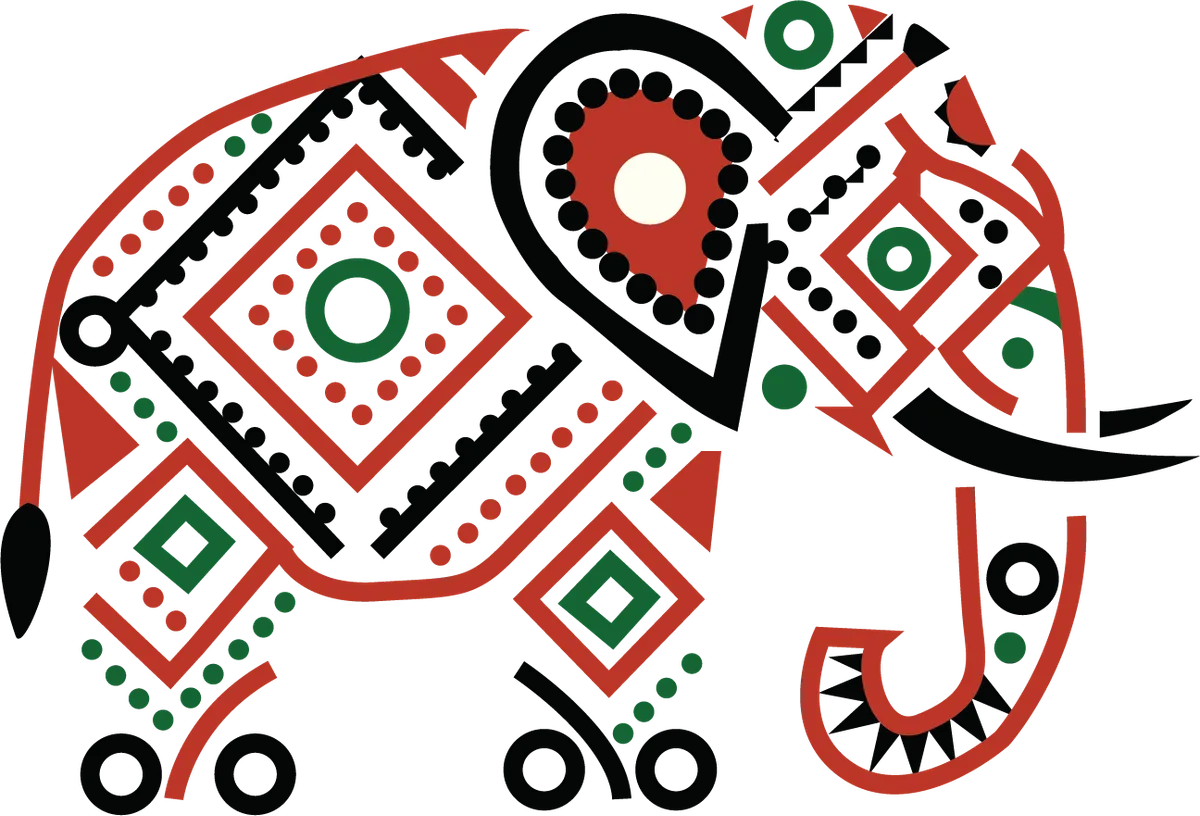
The final mark is an elephant built entirely from embroidery geometry: diamonds, mirror circles and chain-stitch borders, in the craft’s own red, black, ivory and green. It carries through a brochure that introduces each community and its signature style.
Research
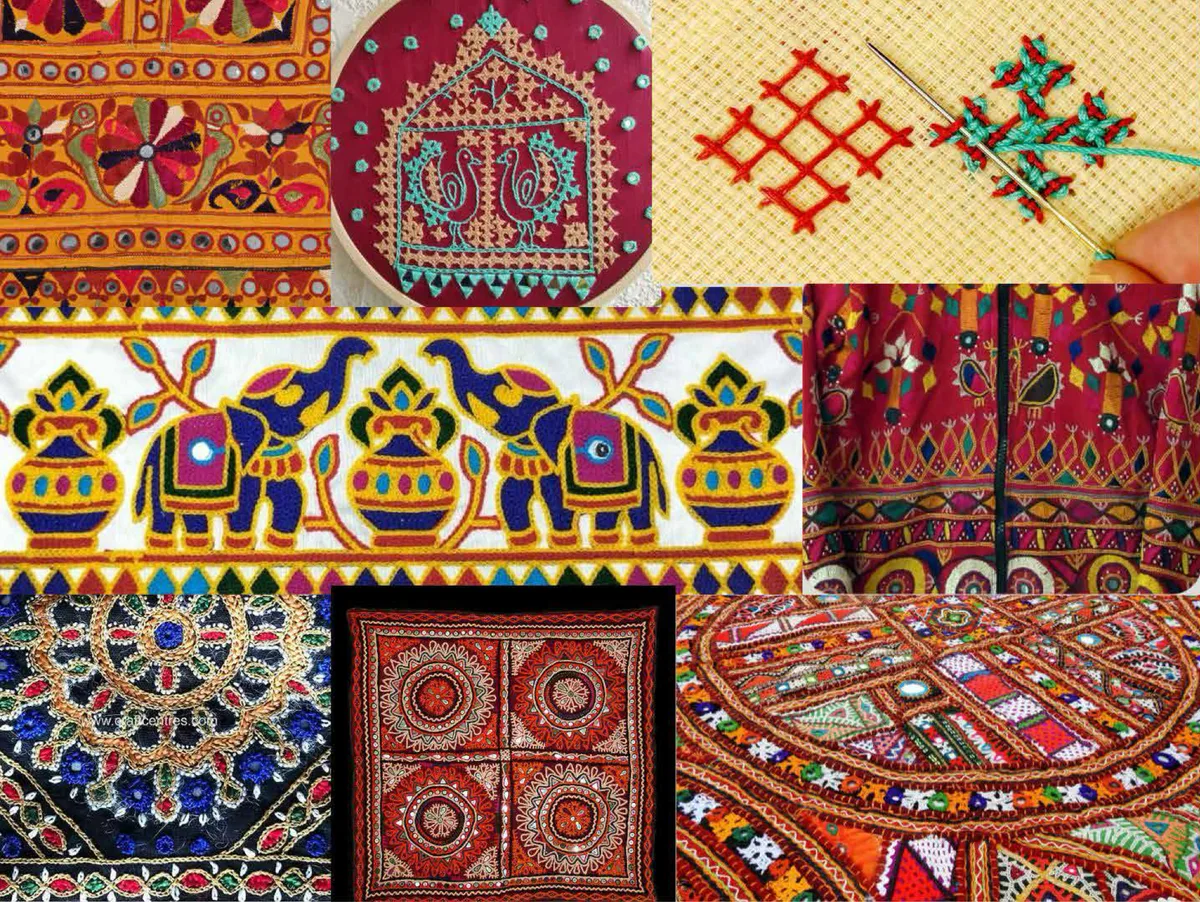
Before drawing anything, I documented the craft, where it comes from, what it is made with, the motifs it repeats and what its colours mean.
01
Introduction
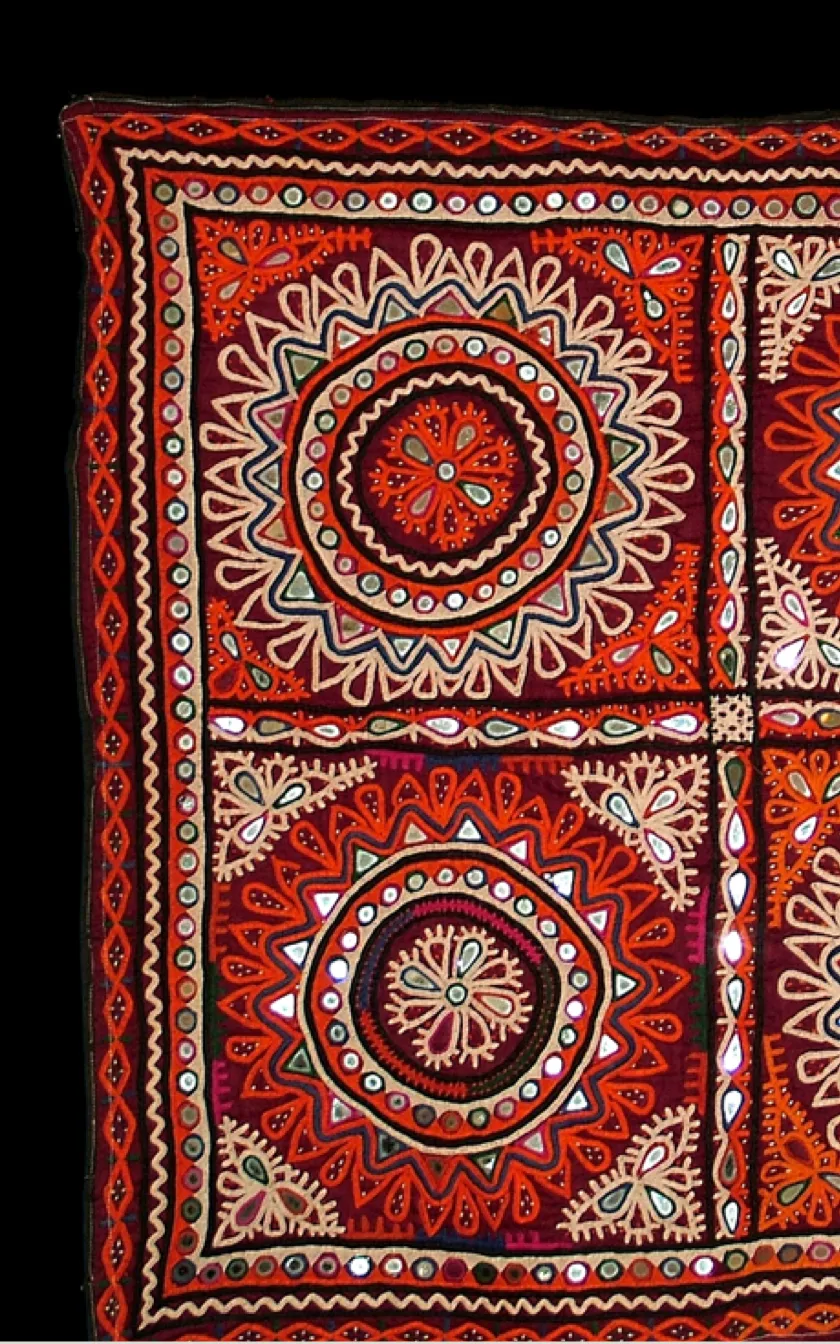
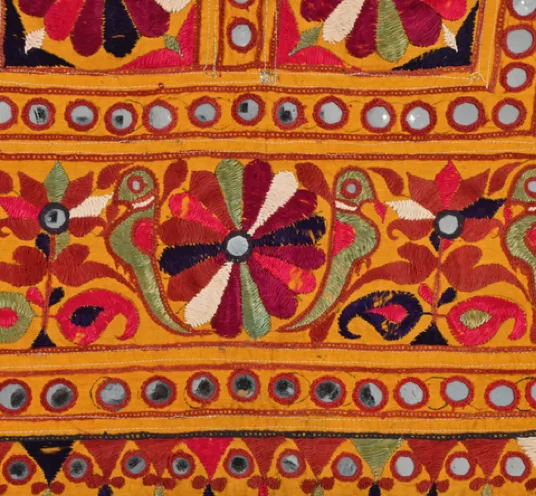
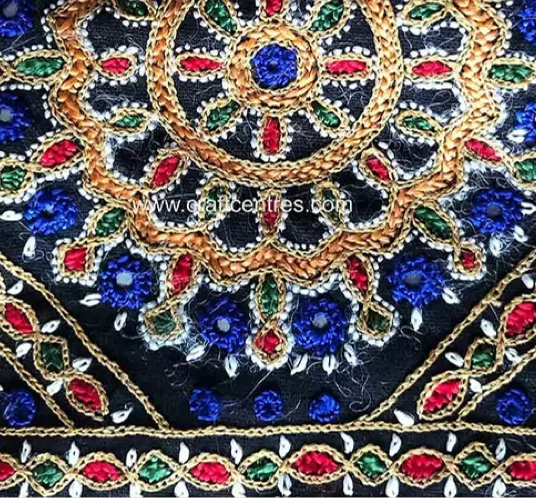
Kutch Embroidery is a vibrant craft form from the Kutch district of Gujarat, India. It carries the cultural heritage of several tribal communities, such as the Rabari, Ahir and Meghwal groups. Mostly made by women, it is worked on cotton fabric in the form of a net, using cotton or silk threads and square chain, double buttonhole, pattern darning, running, satin and straight stitches. Its signature sparkle comes from small mirrors called abhla, sewn over the geometric designs. It is part of daily life, rituals and celebrations, and a key symbol of identity and tradition.
02
Historical & cultural context
The craft is rooted in the nomadic and tribal lifestyles of the Kutch region, blending influences from Central Asia with local indigenous traditions into a visual narrative of its own. It was traditionally used in bridal attire, household textiles and religious ceremonies, and it now holds a Geographical Indication (GI) tag that protects its origin and supports its artisans. Through its motifs and colours it tells stories and signals social status, marital status and spiritual belief.
03
Motifs & patterns
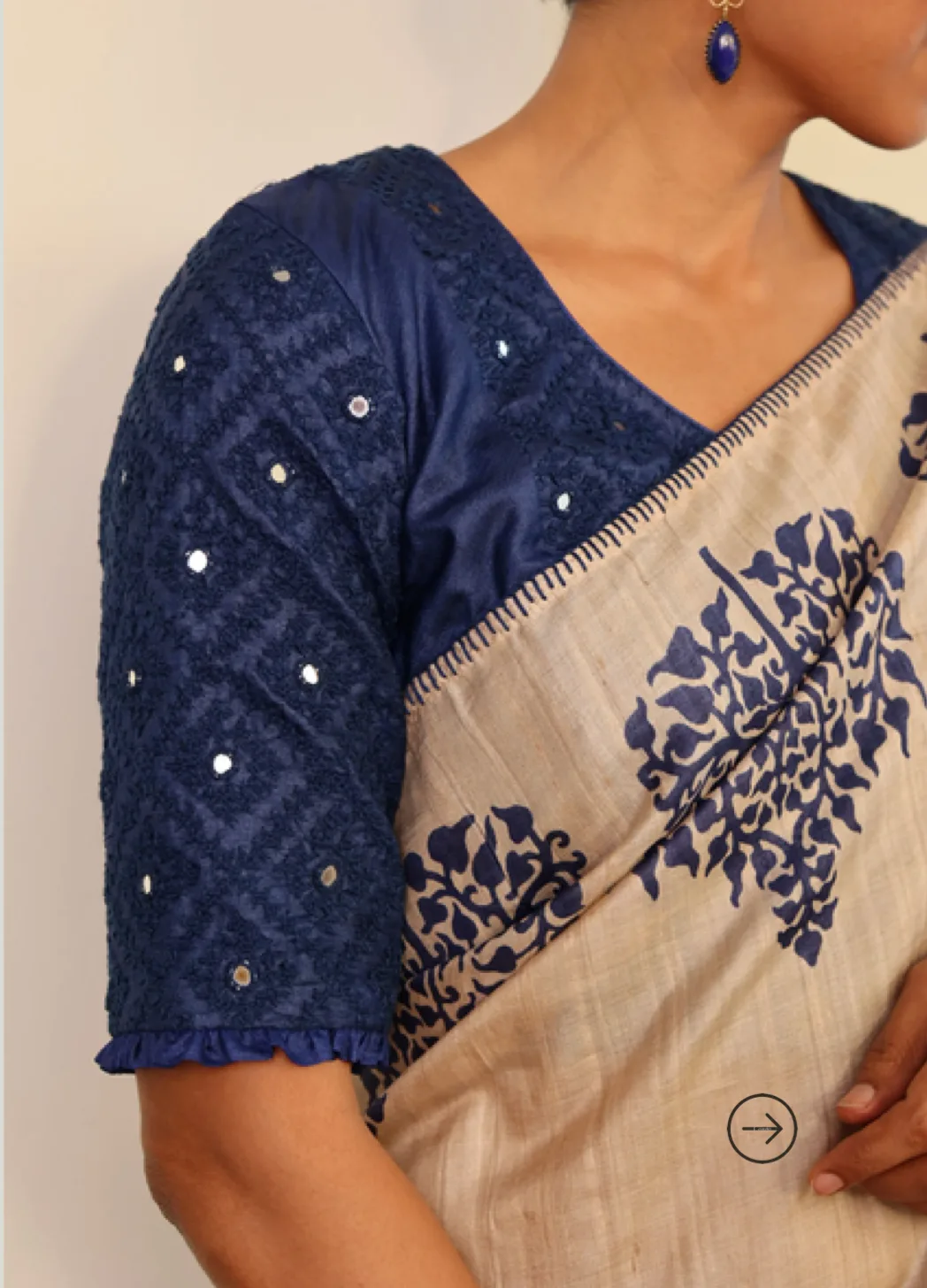
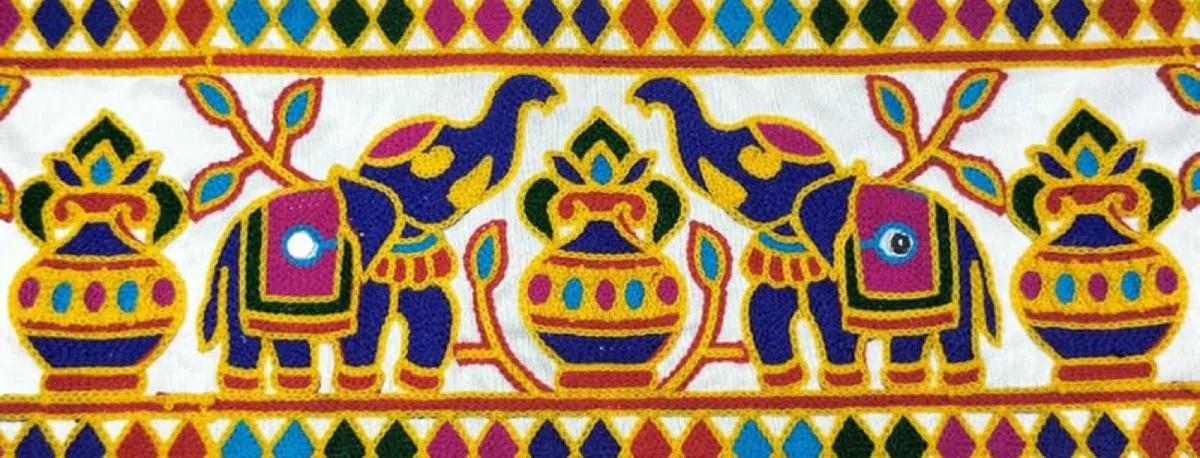
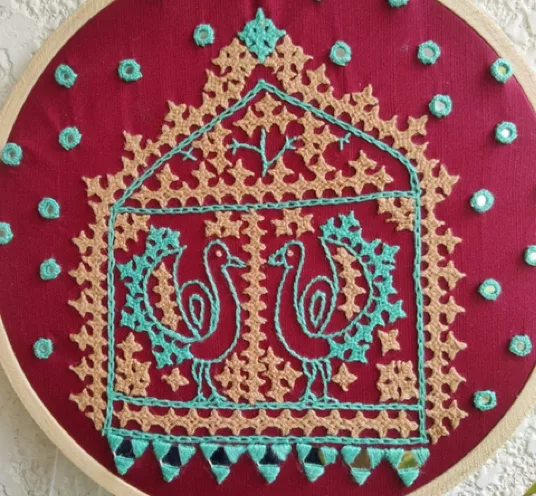
The embroidery features bold geometric shapes and nature-inspired motifs such as peacocks, elephants, camels and flowers. Central to its identity are the small reflective mirrors (abhla) that add sparkle and depth. Each community, including the Rabari, Mutwa and Suf, has its own stitch patterns and symbolism, and the motifs carry cultural stories passed down through generations.
04
Materials & techniques
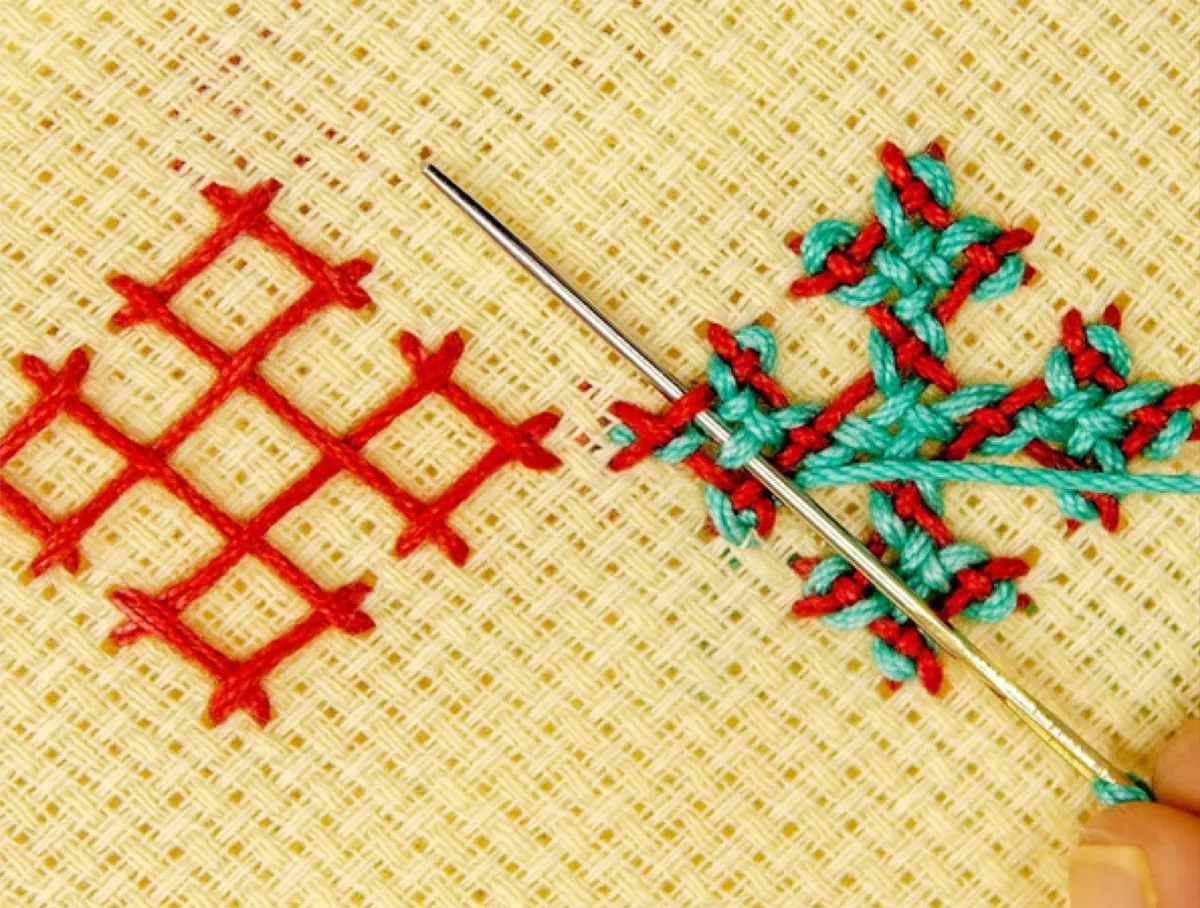
The work is done with cotton or silk threads on a base of cotton, silk or satin. The key stitches are chain stitch, buttonhole stitch, satin stitch and the intricate Suf stitch, known for its reverse-side precision. Mirrors and beads are sewn in for embellishment. It takes real skill and time, and the result is a dense, textured surface rich with cultural meaning.
05
Colour
The palette is vibrant and meaningful. Deep reds, blacks and maroons are the primary colours, standing for auspiciousness, strength and tradition. Ivory, deep green, bright yellow and blue are accents that add vibrancy and carry cultural stories, keeping a visual continuity tied to the craft's heritage.
- Deep Red
- Black
- Maroon
- Ivory
- Deep Green
- Bright Yellow
- Blue
06
Visual audit
- Dense stitching, with texture built up from mirrors and beads.
- A rhythmic repetition of geometric patterns that balances order and energy.
- Colours and motifs that are culturally symbolic, carrying community identity and tradition.
- A handcrafted look that speaks of authenticity and a rich heritage.
Moodboard
Typography


Colour
- Black#000000
- Deep Red#BB331A
- Maroon#800000
- Ivory#FFFFF0
- Deep Green#006400
- Bright Yellow#FFD700
- Blue#1E90FF
The logo
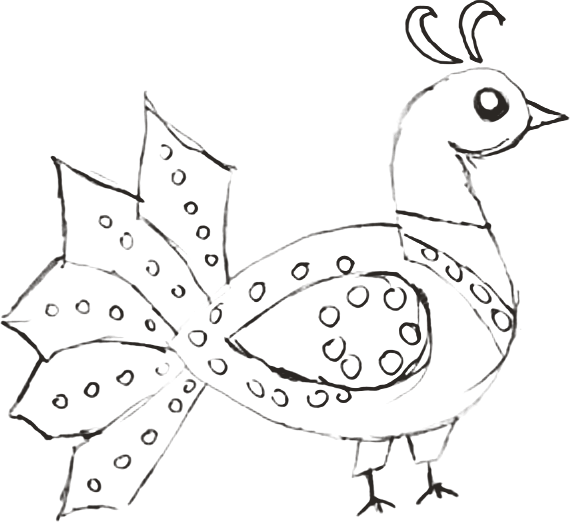
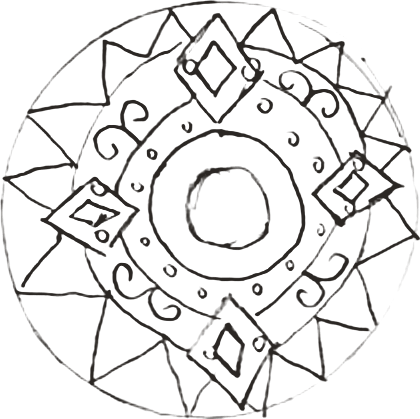
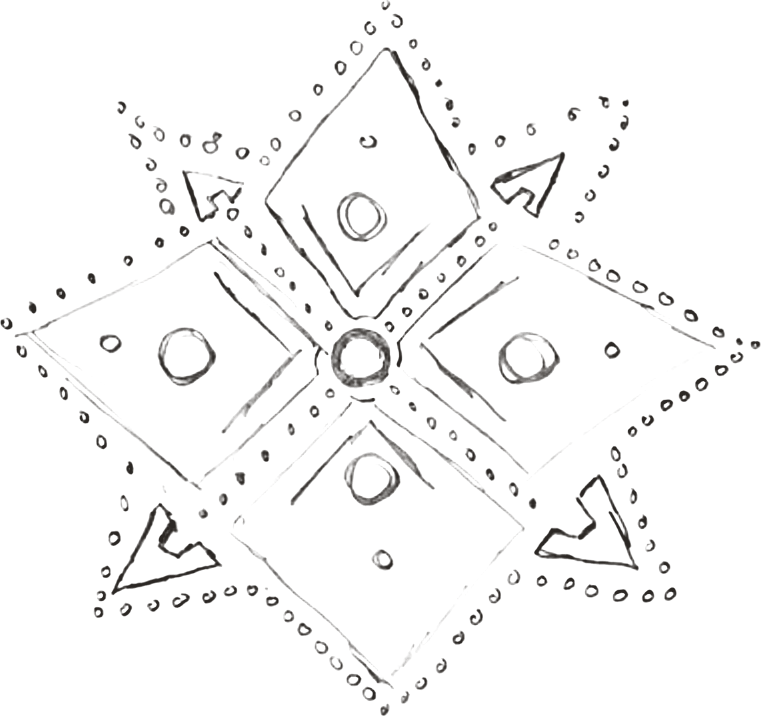
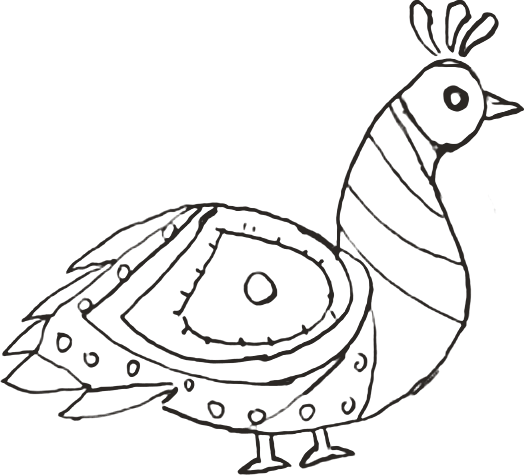
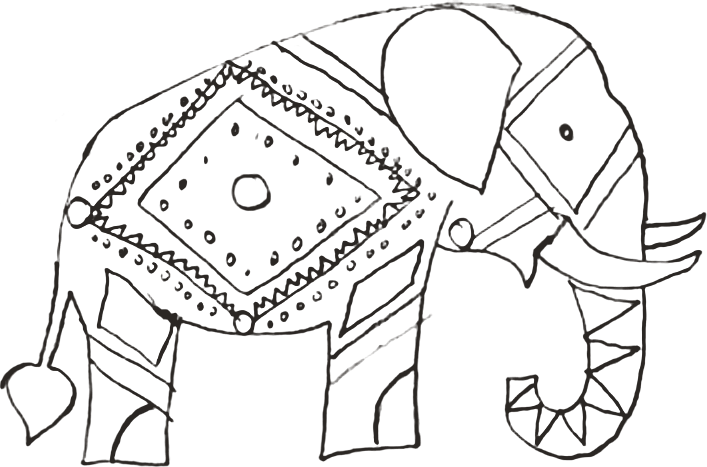
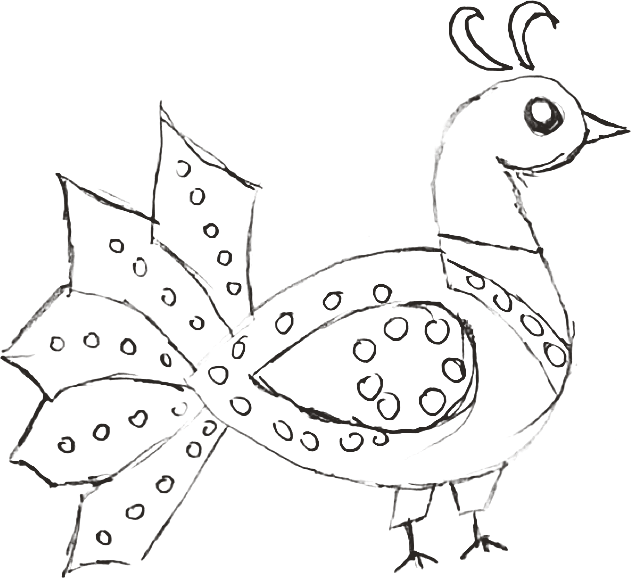
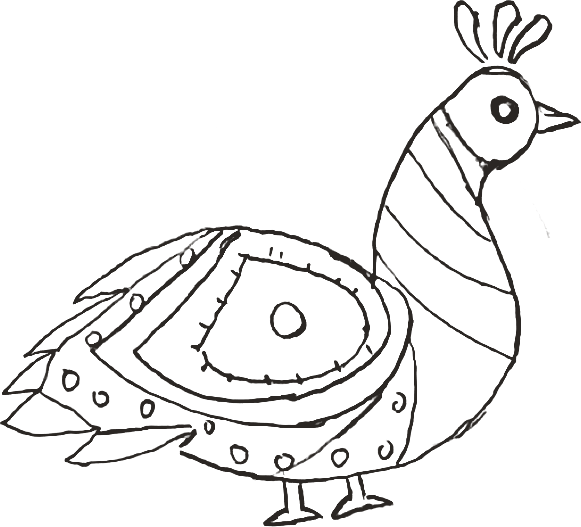
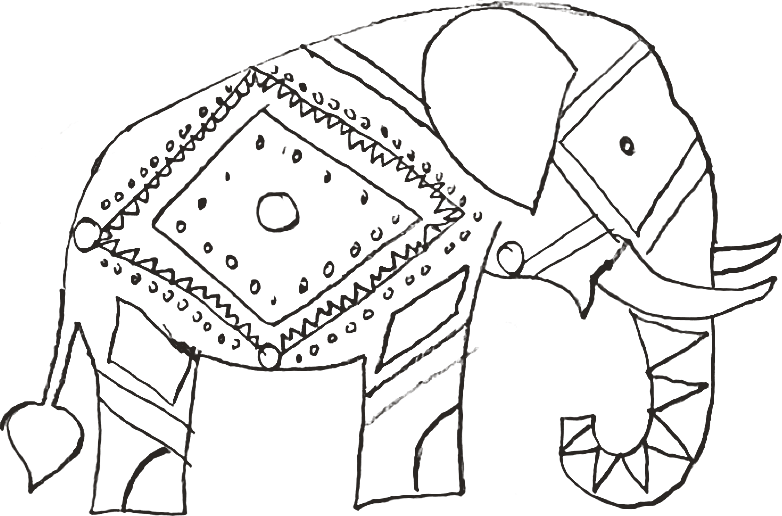
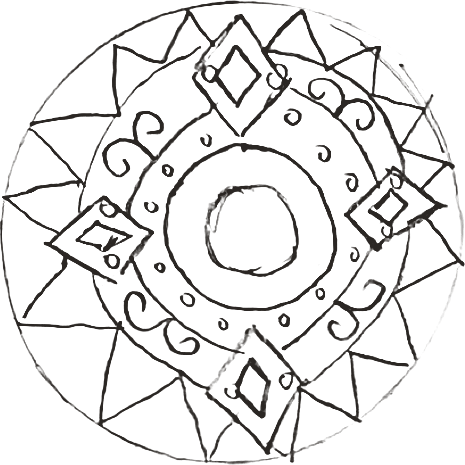
Initial sketches · 9 sketches
Peacocks, elephants and mirror-work mandalas, drawn from the motifs in the research.
 01
 02
 03
 04
 05
 06
 07
 08
 09
Final logo
Typography

The face of the wordmark.
Colour
- Black#000000
- Deep Red#BB331A
- Ivory#FFFFF0
- Deep Green#006400
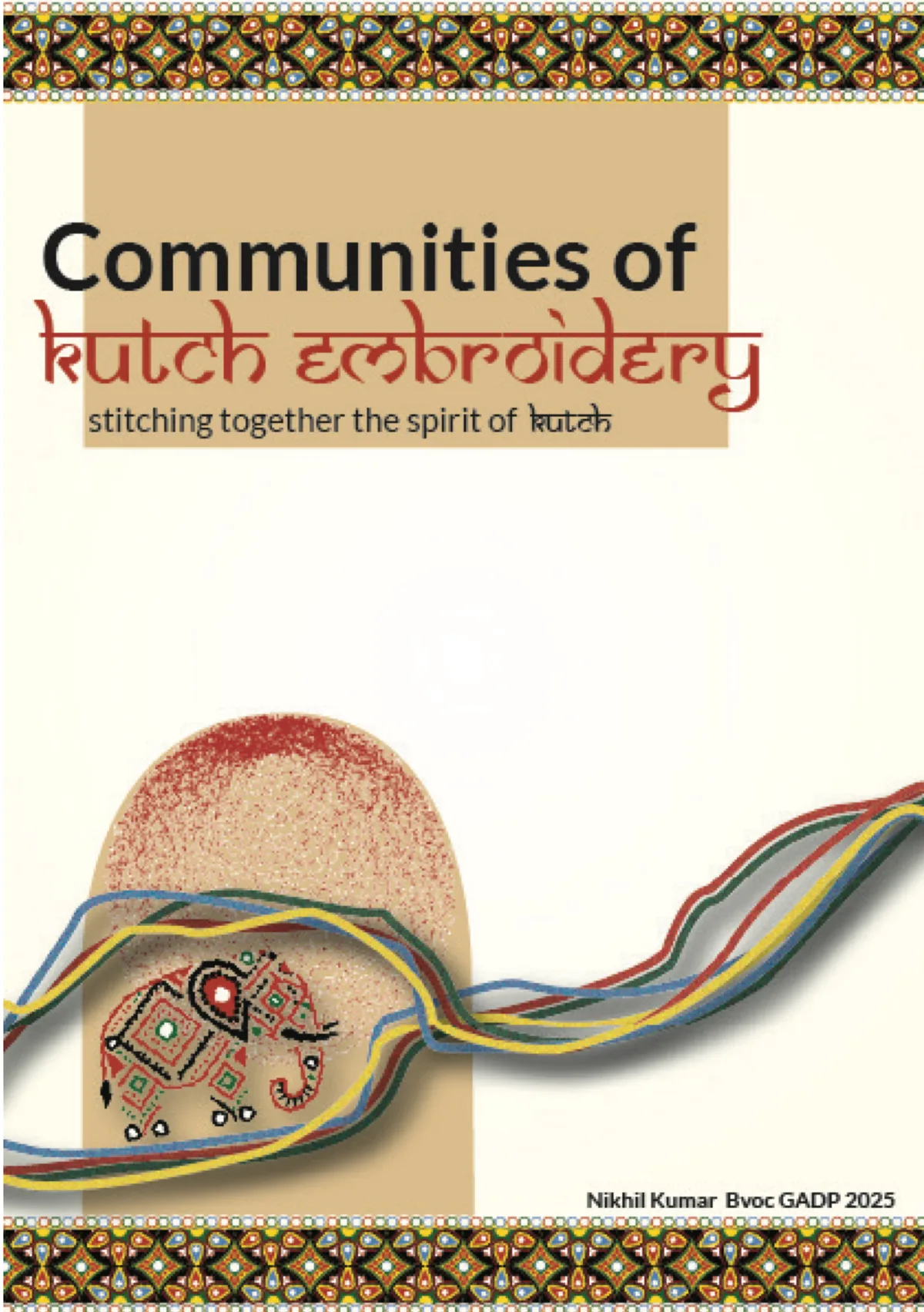
Stitching together the spirit of Kutch.
The brochure
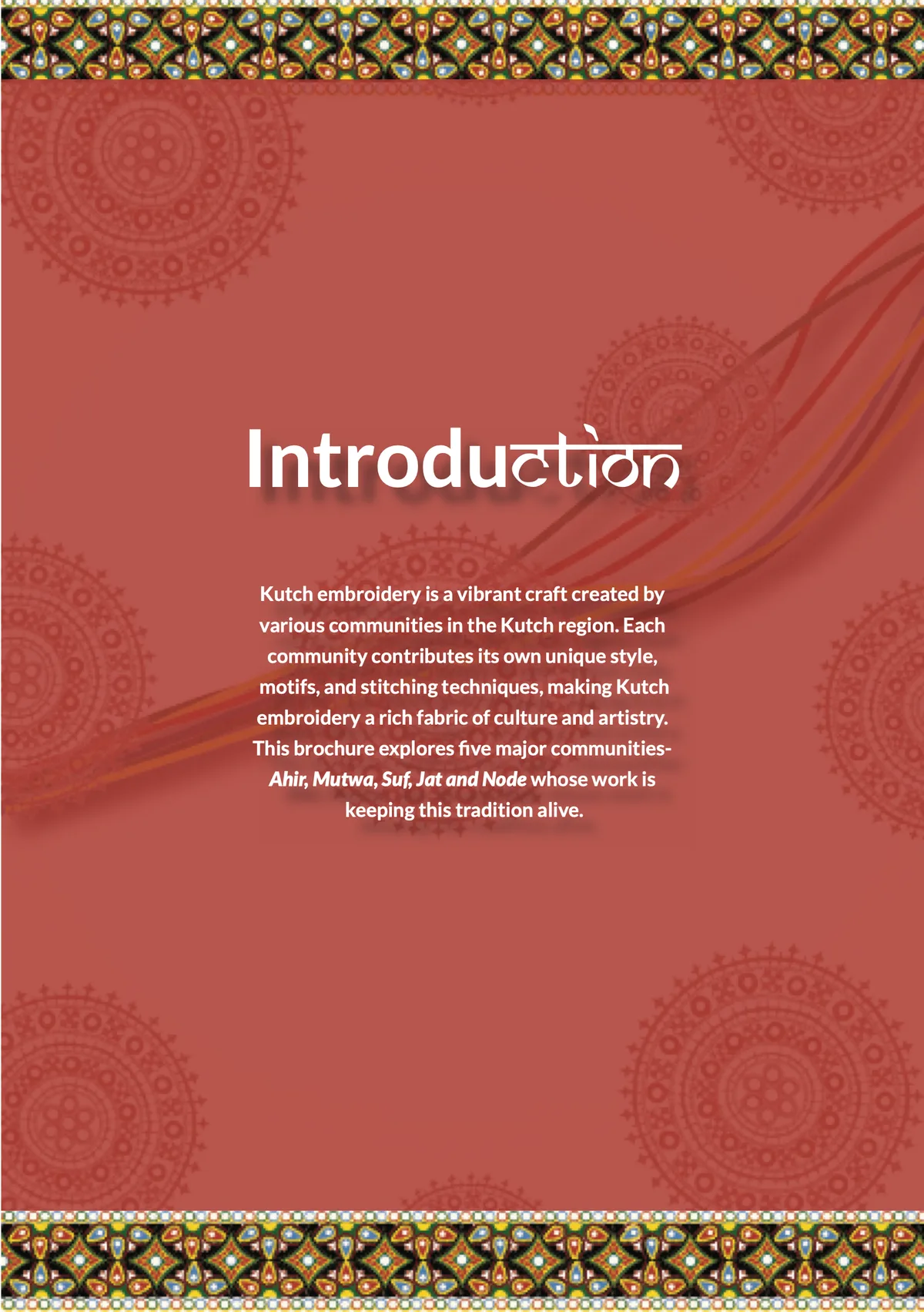
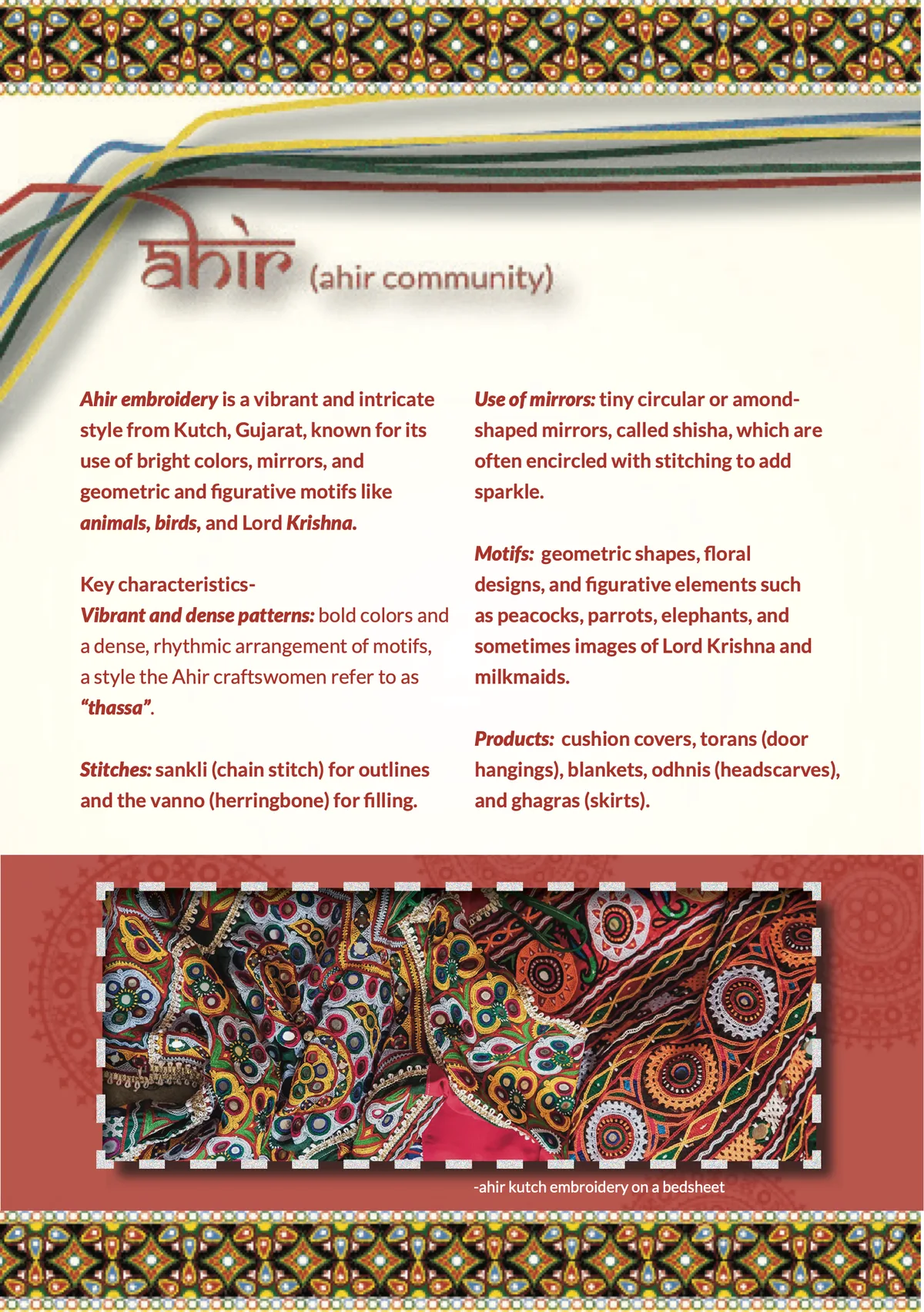
Open full screen ↗Every page · 8 pages
- 01
- 02
- 03
- 04
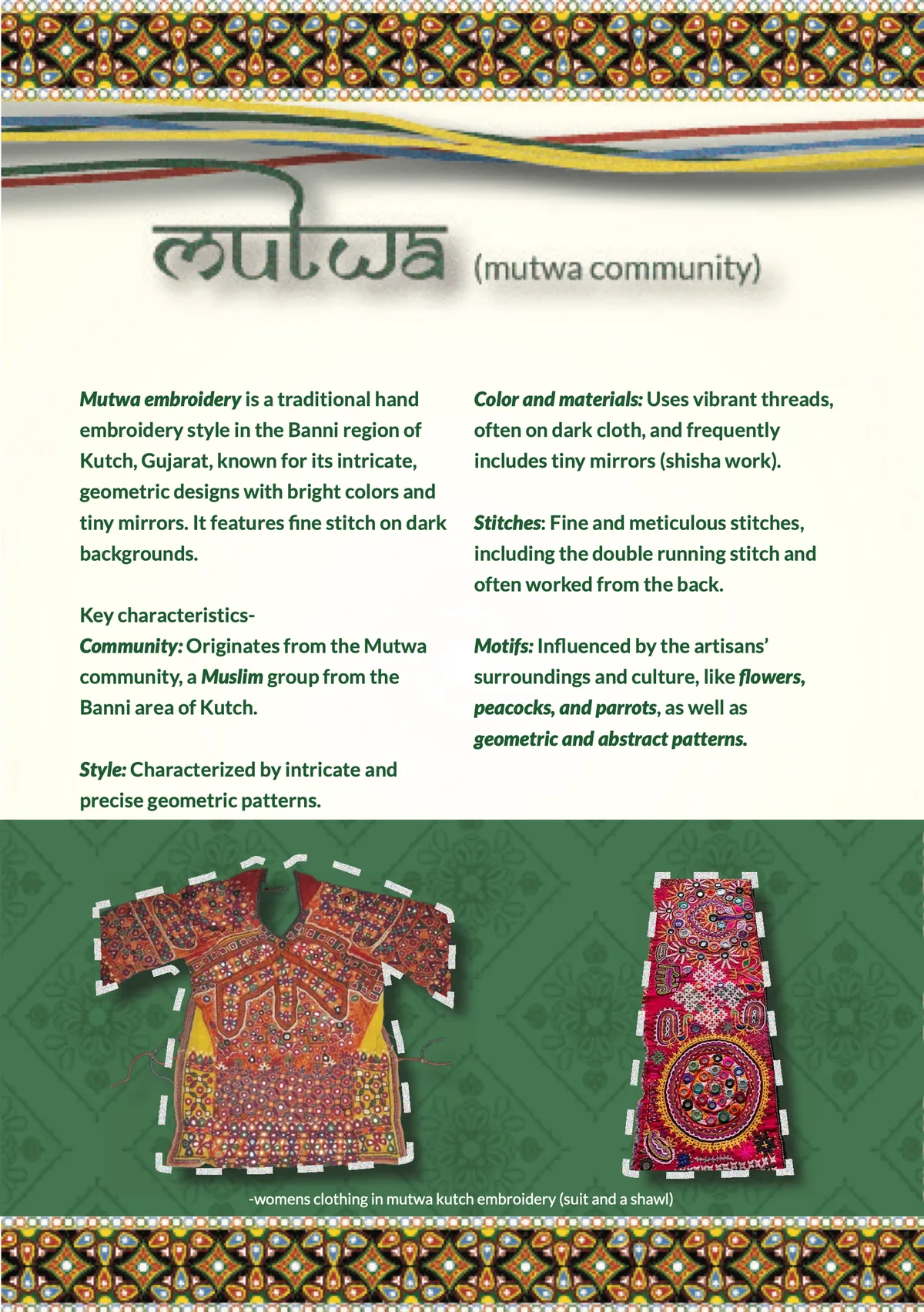
- 05
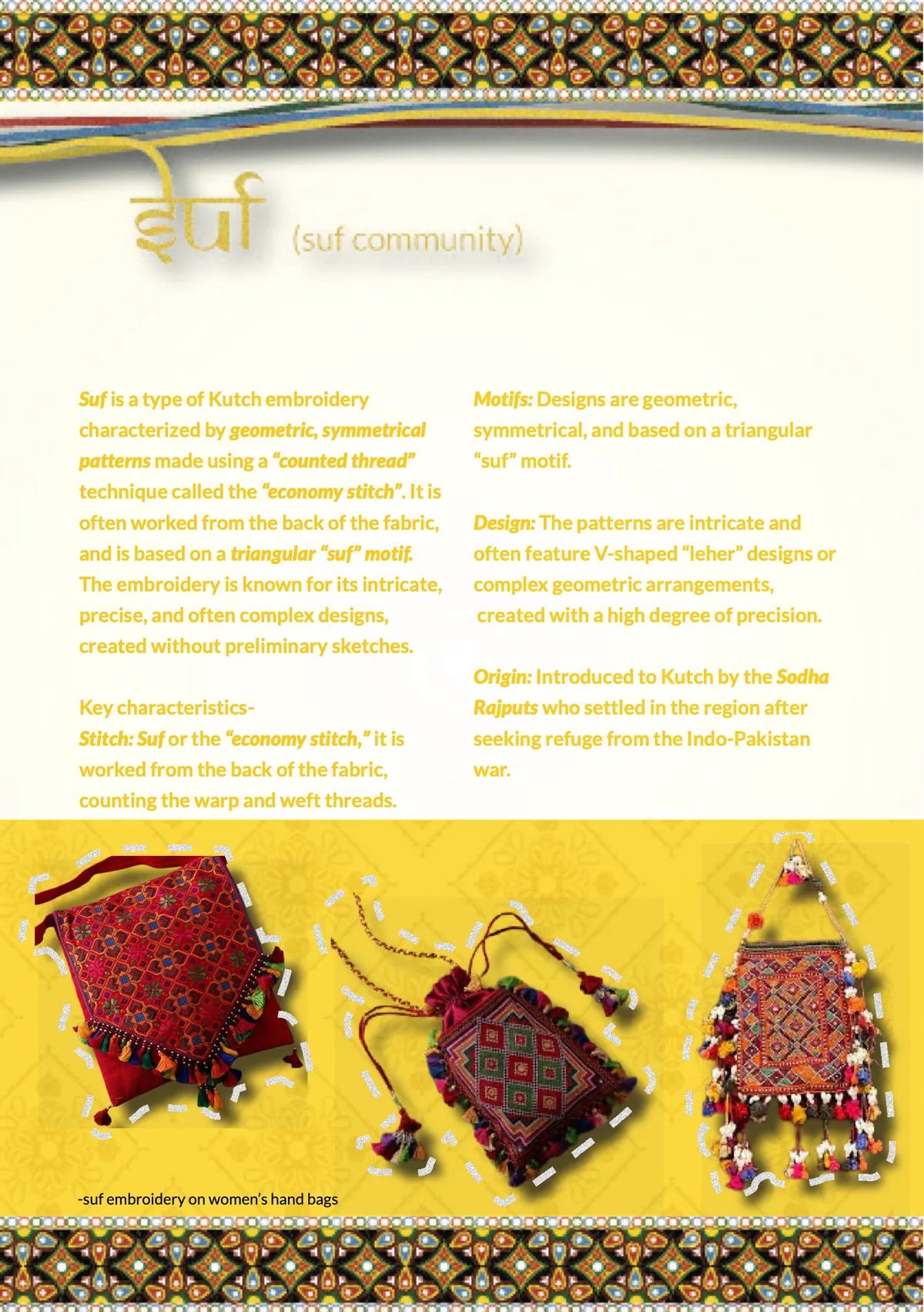
- 06
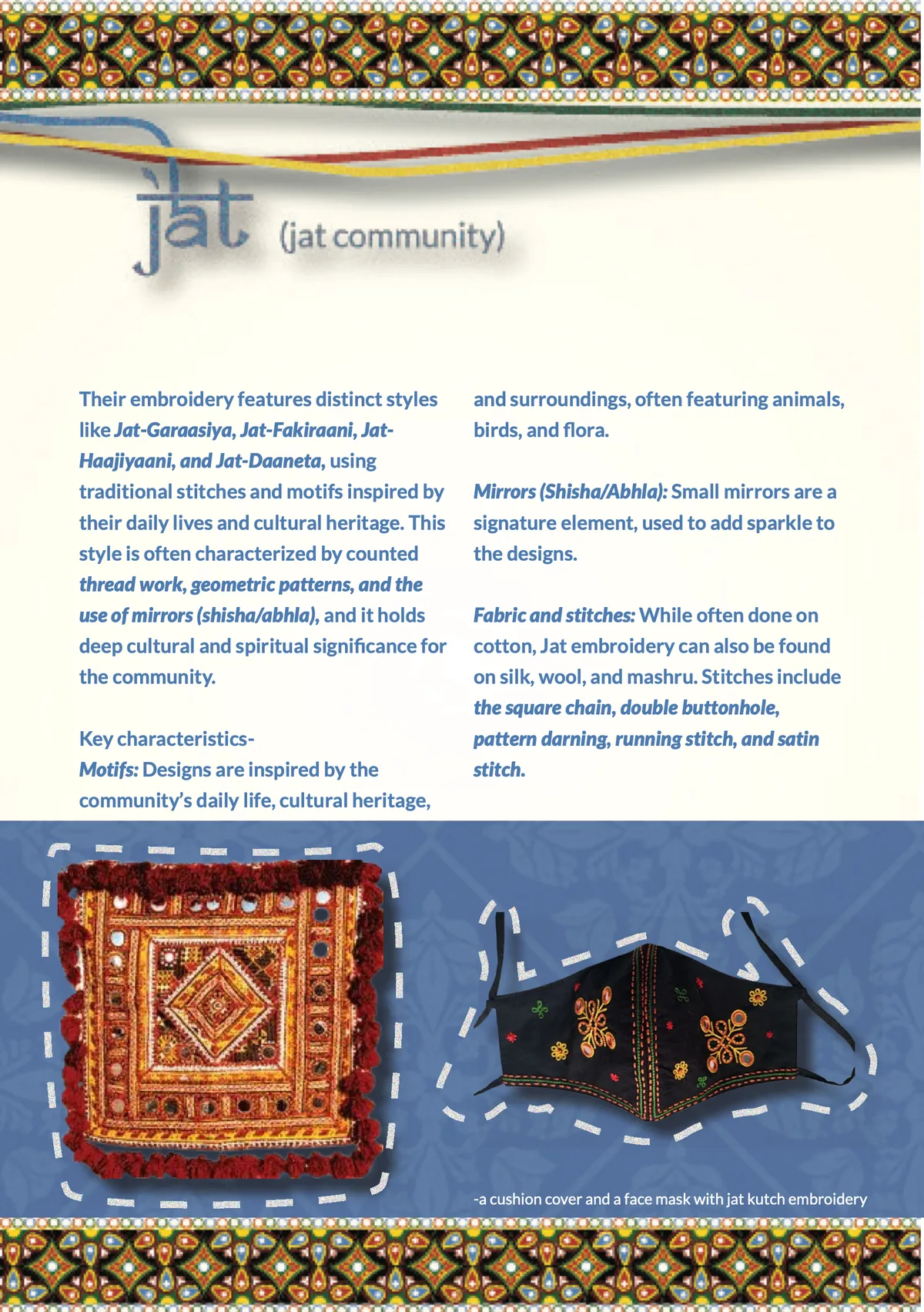
- 07
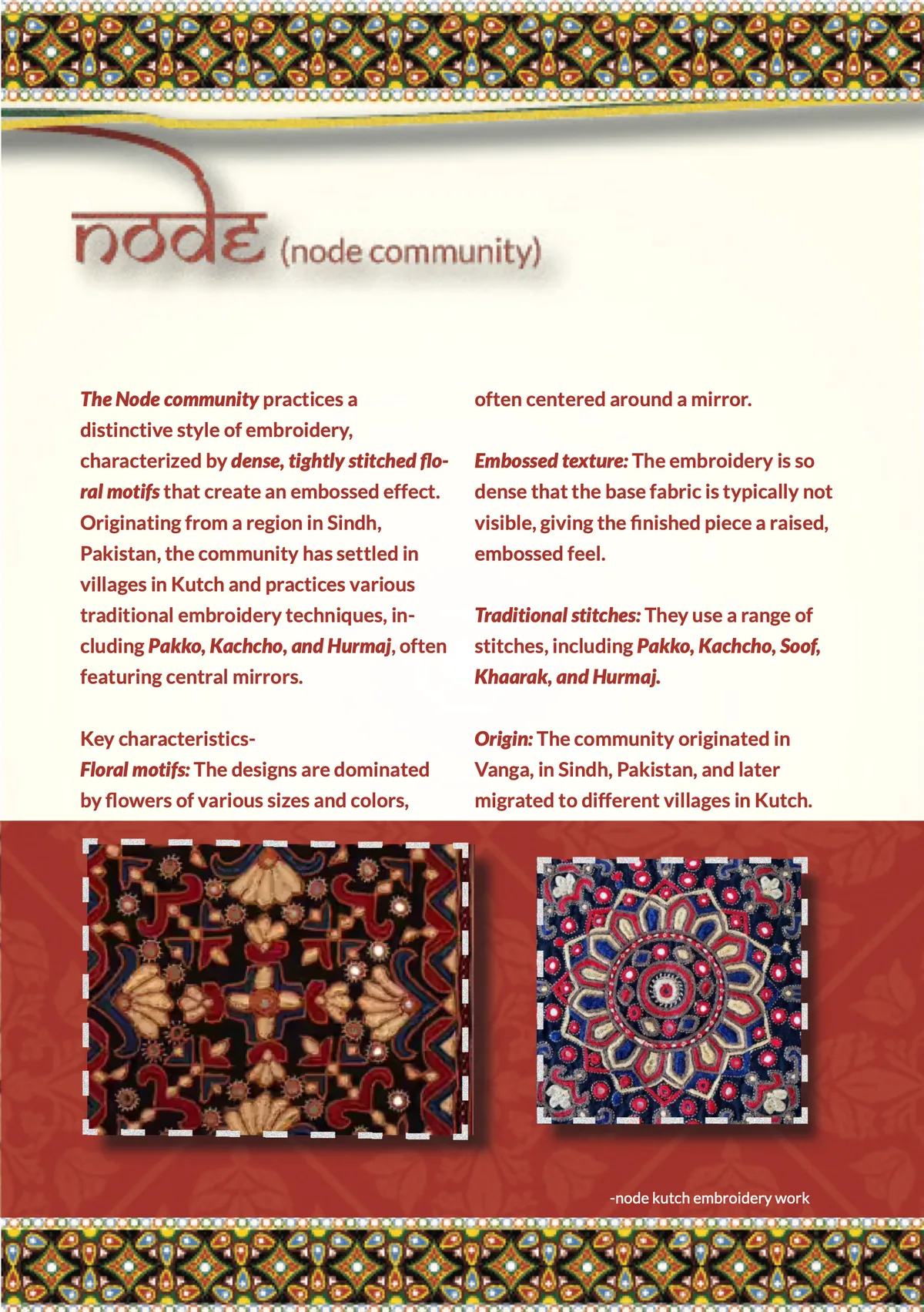
- 08